Showing posts with label News. Show all posts

Sunday, 20 April 2014

Easter 2014: Amid celebrations, tension in Jerusalem and prayers in Boston

Pope Francis arrives at St. Peter's Square for Easter Mass on Sunday, April 20, in Vatican City. Easter Sunday celebrates the Christian belief in Jesus' resurrection.
Christians celebrated Easter around the world Sunday, but with reminders of violence and politics.
In his second Easter message since becoming pontiff, Pope Francis prayed for an end to conflicts in Iraq, Israel, the Central African Republic, Nigeria, South Sudan, Venezuela and Ukraine.
He delivered his speech from the central balcony of Saint Peter's Basilica.
"We pray in a particular way for Syria, that all those suffering the effects of the conflict can receive needed humanitarian aid and that neither side will again use deadly force, especially against the defenseless civil population, but instead boldly negotiate the peace long awaited and long overdue," the pope said.
Jerusalem: Tight security
Security was tight in Jerusalem on Sunday, a day afater tensions escalated when Israeli security forces halted Palestinian Christians who took part in a pre-Easter procession in the Old City.
Robert Serry, the U.N. special coordinator for the Middle East peace process, was among the group trying to walk together on what was Holy Saturday.
"I call on all parties to respect the right of religious freedom, granting access to holy sites for worshippers of all faiths and refraining from provocations, not least during the religious holidays," Serry said.
But Israeli Foreign Ministry spokesman Yigal Palmor called the incident a "non-event." He told the Jerusalem Post that police were trying to limit the number of those packed into the church and the narrow streets around it.
Boston: A blessing before the marathon
In the United States, Cardinal Sean O'Malley will offer a blessing for runners in the Boston Marathon at the end of Easter Sunday Mass at the Cathedral, CNN affiliate WJAR-TV said.
Though an annual part of the race buildup, the Cardinal's blessing will have extra meaning this year. The city is marking the one-year anniversary of the bombings that killed three people and wounded at least 264 others.
This year's marathon is Monday. Other Boston churches will offer special blessings.
British royals, Obama celebrate Easter
Queen Elizabeth II will attend Easter Mass at St. George's Chapel at Windsor Castle. Meanwhile, on the other side of the planet, the Duke and Duchess of Cambridge continue their tour of Australia.
President Obama wished the American people a happy Easter on Saturday in his weekly address.
"For me, Easter is a story of hope -- a belief in a better day to come, just around the bend," he said. "So to all Christians who are celebrating, from my family to yours, Happy Easter. And to every American, have a joyful weekend."
He celebrated Passover earlier this week with the fifth Seder at the White House. Obama is the first president to host a Seder dinner while in office.

South Korea ferry disaster: Families protest over rescue operation


Relatives of passengers missing from the sunken ferry scuffle with police as they try to leave Jindo. 

Angry and frustrated over both the search and rescue operation and the flow of information from South Korean authorities, dozens of relatives of missing ferry passengers intending to march in protest to Seoul were blocked by police from leaving Jindo.
Early Sunday around 2 a.m, the family members left their temporary shelter at an indoor gym and demanded they be able to go to the Blue House -- the official residence of the South Korean President Park Geun-hye -- to present their complaints. 
The residence is located in the capital, Seoul -- some 275 miles north of Jindo. 
Jindo is the port city where the search, rescue and recovery operation has been based since the ferry, carrying 476 passengers, capsized and sank on Wednesday. Hundreds of passengers remain unaccounted for.
A police cordon prevented the planned march from proceeding, witnesses said. A few scuffles broke out but no one was reported hurt.
"We are not getting any help, so we want to go to the Blue House,' said Nam Sa Hyun, an older sister of a student who is missing from the ferry. "We want to tell the president about our situation." 
"For four days, there is no help. Right now, nobody is giving information on the missing. Our children are in the boat and there is no plan."
Though the police were not aggressive to the protesting families, Nam questioned why there were so many officers at the site of anguished relatives. 
"They're not letting us get on the bus, the police are blocking us," she said. "They're not helping us, they're just blocking us."
Several families stayed in the street, attempting to break through police lines in their march. Some families lay down on the ground, sleeping outside in the cold to express their displeasure. 
In a video sent to CNN, angry parents yelled at officials who were trying to convince the families to go back to the gym, which serves as a temporary shelter for families.
"I can't believe them," a woman shouted at the official who was urging them to return.
"Let's go on our way. Why do we sit here and listen to them?'

Friday, 31 January 2014

Beyonce to be studied in the University


Queen Bee has joined other celebrities including Oprah and husband Jay Z, (who has a Georgetown University sociology course named after him), who are studied in the University. The course is called Politicizing Beyonce and can be taken at Rutgers University in New Jersey.

The University’s Department of Women’s and Gender Studies will be exploring the social & cultural significance of the songstress’s music and image.

The course will allow fans to explore Beyonce's alter ego Sasha Fierce, and debate the extent of control she has over her own image. They will also debate whether her red hot persona is an outlet of female sexual empowerment or merely complying with western gender stereotypes.
"This isn’t a course about Beyonce’s political engagement or how many times she performed during President Obama’s inauguration weekend. She certainly pushes boundaries. While other artists are simply releasing music, she’s creating a grand narrative around her life, her career, and her persona.’ Kevin Allred, the person in charge of the course at Rutgers University said

Friday, 24 January 2014

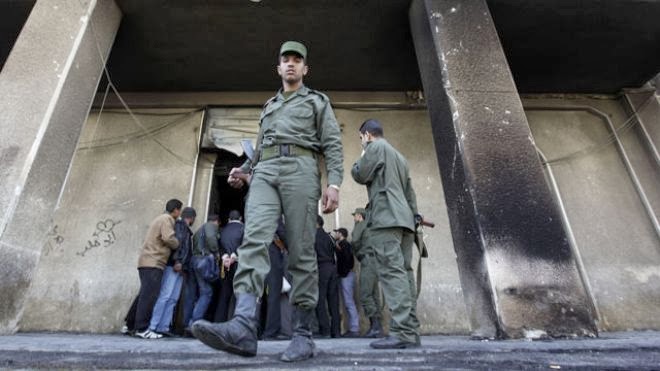
Egypt: Big explosion hits Cairo police headquarters, killing at least 4

Emergency personnel and bystanders gather outside the police headquarters. 
A plume of black smoke rose over Cairo early Friday after a powerful explosion hit the city's police headquarters, killing at least four people and wounding more than 50 others, Egyptian authorities said.
The blast struck a key symbol of authority in a country that has been shaken in recent years by political turmoil and violent unrest.
It was followed by two smaller explosions near police stations in other areas of Cairo, one of which wounded several people.
The blasts took place at time of high tension, the day before the third anniversary of the 2011 revolution that eventually brought down the country's former authoritarian leader Hosni Mubarak.
And they come amid the instability ushered in by the military's overthrow last year of the democratically elected former president, Mohamed Morsy, and the ensuing crackdown by security forces on the Islamist movement that supported him, the Muslim Brotherhood.
Suicide bomber suspected
The first blast appeared to have been caused by a suicide attacker who tried to drive a vehicle laden with explosives into the police headquarters, said Maj. Gen. Hany Abdel Latif, a spokesman for the Interior Ministry, citing preliminary reports.
Guards stationed in front of the headquarters in the Abdeen district of Cairo opened fire at the vehicle, and the explosion went off in the building's vicinity rather than inside, he told state news agency Egynews.
The force of the blast destroyed the front of the first and second floors of the eight-story building, he said, and caused material damage on the third floor.
Most of the building's windows appeared to have been blown out. Air-conditioning units dangled by cables from the shattered facade.
At least 51 people were wounded in the explosion, state-run broadcaster Masriya TV reported, citing the Health Ministry.
Visiting the ruined building, Egyptian Interior Minister Mohamed Ibrahim condemned the bombing.
"These are nothing but desperate attacks in an attempt to create chaos, but the citizens here will remain resilient," Ibrahim told Masriya TV.
He said security forces would ensure that Egyptians would be able to celebrate the anniversary of the revolution Saturday "as if nothing happened today."
More explosions follow
CNN's Reza Sayah said the blast appeared to be "the most powerful bomb attack that we've seen here in central Cairo in recent memory."
Speaking from near the scene of the blast, Sayah said the attack will likely intensify the fight between Egypt's military-backed government and the groups that oppose it.
It wasn't immediately clear who was behind that attack.
Friday is a holiday in Egypt, so the police headquarters is unlikely to have been as busy as it would have been on a weekday. The blast happened around 6:30 a.m., according to state media.
Footage aired by local broadcasters showed significant damage to the front of the building. The street in front of the headquarters was cordoned off.
Hundreds of people -- some stunned, some angry -- gathered around the scene, Sayah said. Many of those in the crowd were quick to blame the Muslim Brotherhood, despite no official word on who might be to blame.
The explosion appeared to have shattered windows and damaged other parts of buildings several blocks away, he said.
A second, much smaller explosion Friday went off near police station in Dokki, a residential area of Cairo, wounding several people, authorities said.
And in the Al-Haram district of the city, a homemade bomb exploded in the vicinity of a police station, the semiofficial Ahram Online news outlet reported. There were no immediate reports of casualties from that explosion.
Fears of more turmoil
In a referendum earlier this month, Egyptian voters overwhelmingly approved a new constitution proposed by the military-backed government, according to the country's electoral commission.
But supporters of the now-banned Muslim Brotherhood had boycotted the vote in response to a continuing government crackdown.
Rights groups have expressed concern about what they call an increasingly repressive environment in Egypt, where more than 2,200 people have been killed since the ouster of Morsy.
Some anti-government groups have resorted to violence. Bomb attacks and shootings against the security apparatus have taken place across the country in recent months -- a situation described by some as a low-level insurgency.
The government has blamed the Muslim Brotherhood for many of the attacks, even though the movement has condemned them.
The bombing of the Cairo police headquarters suggested the violence is taking on a more serious, high-profile form.
"The fear is there's a very difficult and tumultuous phase ahead for this country," Sayah said.

Thursday, 23 January 2014

Captain and Tennille File for Divorce: Toni Tennille and Daryl Dragon to End Marriage After Nearly 40 Years

Daryl Dragon and Toni Tennille at the Bellagio July 27, 2005    
Toni Tennille and Daryl Dragon, of Captain and Tennille, are divorcing after nearly 40 years of marriage. 

     Credit: Ethan Miller/Getty Images
Love isn't keeping them together any longer. Toni Tennille and Daryl Dragon, of the Captain & Tennille singing duo, are divorcing after nearly 40 years of marriage.
Tennille, 73, filed for divorce from Dragon, 71, in Arizona on Jan. 16, according to paperwork obtained by ABC News.
PHOTOS: Hollywood's ugliest divorces
Dragon told TMZ on Wednesday, Jan. 22 that he was blindsided by the filing. "I don't know why she filed," he said, adding that they are still living together. "I gotta figure it out for myself first."
Dragon and Tennille toured with the Beach Boys, as keyboardists, in the '70s. They later began touring as a duo, and released their first album, Love Will Keep Us Together, in 1975. Some of their hit tracks include: "Do That To Me One More Time," "Muskrat Love," and "The Way I Want To Touch You."
PHOTOS: 2013's biggest splits
In a September 2010 blog post, Tennille announced that Dragon suffered from a neurological condition similar to Parkinson's that caused tremors and made it difficult for him to play keyboards. "Some days he does pretty well.... other days his playing is severely compromised," she wrote.
PHOTOS: Ageless A-listers
Captain & Tennille's website was recently updated with a message about their split. "Until Thursday, January 16th, 2014, when Toni Tennile met with a DIVORCE ATTORNEY, in Phoenix, AZ, everything relating to THE CAPTAIN & TENNILLE appeared to the public as them being the ideal model for a 'rock-solid' married pair," the statement read. "But almost all people naturally evolve over time, & sometimes hidden feelings start to be uncovered when one may read, just a little more into (the popularized, substitute heading appearing just below), stating, for instance: 'MUSIC HAS KEPT THEM TOGETHER.'"

Omega-3 Fatty Acids Might Protect The Aging Brain

Adding to our diets more of the omega-3 fatty acids in fatty fish (or fish oil supplements) has been controversial  in recent years, but a new study adds some interesting neurological evidence to their effectiveness. Cognitive decline is a too-common side effect of aging, and Alzheimer’s disease is unnervingly prevalent. So it’s nice to feel like we’re doing something to reduce the odds. Eating fatty fish regularly might be one way to this, and so might taking fish oil supplements – but it depends on the kind.
A team at the University of South Dakota looked at 1,100 postmenopausal women who’d taken part in the Women’s Health Initiative Memory Study. The levels of the fatty acids DHA and EPA, found in fatty fish, were measured in their red blood cells, and the volume in different areas of their brains, as well as total brain volume, were measured via MRI at the end of the eight-year study.
Salmon
It turned out that women who had the highest levels of the fatty acids in their red blood cells had greater overall brain volume than women with the lowest. They also had greater volume in the hippocampus – about 2.7% greater – than women with the lowest levels. The hippocampus is the brain area that’s thought to be the seat of learning and memory, and the one most affected by Alzheimer’s disease.
What are these fats doing in the brain? “It’s likely that fish oil doesn’t increase brain volume, but prevents brain shrinkage with age,” study author James Pottala tells me. “This could be due to several mechanisms. The brain metabolizes DHA into several anti-inflammatory compounds that could help prevent cell death. Also, DHA is concentrated in nerve cell membranes, so if a sufficient amount is not available in the blood for replenishment then it makes sense that the amount of brain matter would decline over time.”
He adds that consuming higher levels of omega-3 fatty acids could be the equivalent to two extra years of brain health. For people who don’t consume much fish, supplements might be necessary. This is because the body is very poor at converting the omega-3s found in plant sources (namely ALA) to the heart- and brain-healthy DHA and EPA. Therefore, says Pottala says, “most organizations recommend that all adults should eat non-fried ‘oily’ fish (e.g. salmon, herring, tuna, sardines, etc.) at least twice a week,” or taking high-quality fish oil supplements.
Unfortunately, not all supplements are created equal, as another study has just reported (see below for a nice graphic of the top 10 brands in both quality and value). On average, supplements contained about 14% less DHA than indicated on the label, but there was huge variation across brands. The highest quality supplements were Dr. Tobias, Nordic Naturals, and Axis Labs. The best value supplements were Nature Made, Axis Labs, and NOW Foods.
While there’s no failsafe way to protect the brain against disease, eating a healthy diet full of antioxidants and essential nutrients, is one way to help reduce the risk. Always talk to your doctor about adding supplements to your diet.

Indian village elders arrested for 'ordering' gang-rape


Police have arrested 13 men after a 20-year-old woman was allegedly raped as a punishment for having an affair 

An Indian woman shouts slogans during a protest to mourn the death of a gang rape victim in New Delhi, India, Thursday, Jan. 3, 2013.Indian police have arrested 13 people after a 20-year-old village woman was allegedly gang-raped on orders from tribal elders who objected to her relationship with a man.
The attack again highlighted India's dismal record on preventing sexual violence, after the fatal gang-rape of a student in New Delhi in December 2012 sparked protests and unleashed seething public anger.
Politicians denounced the latest attack as "outrageous", while women's groups said it showed how little things have changed for women since 2012 in a deeply patriarchal nation.
The incident took place on Tuesday in a remote village in West Bengal state, where the unmarried woman from the Santhal tribal group was suspected of a relationship with a Muslim man from another village.
The elders, who comprise the informal village council, initially fined her family 25,000 rupees (£280) but they were too poor to pay, district police superintendent C Sudhakar told AFP.
"The girl was gang-raped for having an affair with a youth of another community and failing to pay the fine which was imposed by the village council," he said.
"All 13 men, including the chief of the village council, who were named in the complaint before the police, were arrested," Sudhakar said.
The woman, her head wrapped in a scarf, confirmed the attack when confronted by television crews, saying softly: "They raped me ... all of them were my father's age."
Tribal or caste-based village councils composed of male elders exert enormous influence over rural life, particularly in northern India. They often issuing diktats and punishments for moral and other perceived offences.
The incident echoes a brutal attack on a woman in neighbouring Pakistan in 2002 on the orders of a village council, to avenge her 12-year-old brother's alleged impropriety with a woman from a rival clan.
This week's incident happened in the village of Subalpur, 149 miles west of the state capital Calcutta, after the couple were found together.
"The head of the village council held an urgent meeting in the village square on Tuesday when the girl and her lover were called," Sudhakar said.
"The girl and her lover were tied to two separate trees and fined 25,000 rupees each for having an affair," he said.
"As the parents of the girl, who were also present at the meeting, expressed their inability to pay the fine, the head of the village council ordered that she should be raped by the villagers as punishment."
The man was freed after he agreed to pay the fine within a week, but the woman was taken to a shed where the attack was carried out, he said.
The woman, who was recovering in a local hospital in Birbhum district, identified to police all 13 attackers. They were all denied bail on Thursday after appearing in court in the nearby town of Bolpur.
Politicians from all sides of politics branded the incident "inhuman and completely outrageous," while some called for the men to be swiftly prosecuted and sentenced to death.
"In a democratic country, based upon the rule of law, no vigilantism can be permitted," said Manish Tewari, Information Minister.
But the incident shows the level of control that unelected male councils, known as "panchayats", still have over women in India's deeply patriarchal society, women's groups said.
"This West Bengal case shows the yawning gap between our constitution and our society," said Kavita Krishnan, secretary of the All India Progressive Women's Association.
"It is not only in remote rural areas, such mentality exists in metros like Delhi. The seeds are embedded deeply in our society and our caste."
In the same district four years ago, a teenage girl from a local tribe was paraded naked through the streets for the same reason, according to the Press Trust of India news agency.
Last month India marked the first anniversary of the death of the 23-year-old student who was gang-raped in New Delhi on a moving bus, an attack that sent shockwaves across the nation.
Despite tougher laws and efforts to change attitudes to women across India, the number of reported sex crimes continues to rise.
Earlier this month, a Danish woman was allegedly gang-raped and robbed in New Delhi after she became lost on her way back to her hotel. Six men have been arrested over that attack.

Wednesday, 22 January 2014

Hundreds of dolphins slaughtered in Japan’s notorious Taiji Cove

 Hundreds of dolphins slaughtered in Japan
Hundreds of bottlenose dolphins have been captured and killed as part of Japan’s traditional hunt season, despite international outcry to end the ‘terrible suffering’.
The annual slaughter takes place in the coastal town of Taiji where the mammals are driven into a pen and killed for their meat using metal poles.
According to environmental group Sea Shepherd Conservation Society (SSCS), the poles are inserted into the dolphin’s blowhole to sever their spine.
‘A metal rod was stabbed into their spinal cord, where they were left to bleed out, suffocate and die. After a traumatic four days held captive in the killing cove, they experienced violent captive selection, being separated from their family, and then eventually killed, ’ SSCS activist Melissa Sehgal said.
They say the practice is cruel and it can take up to 30 minutes for the dolphins to die.
Every year, the fishermen drive hundreds of dolphins into Taiji cove, select some for sale to marine parks, release some and kill the rest.
This year they have found a rare white albino dolphin calf, which has been separated from its mother causing SSCS to speculate that the mother killed herself.
‘Our volunteer Cove Guardians documented and witnessed the grieving mother repeatedly spy-hopping, looking for her calf, before lowering herself into the water, never to resurface.
‘Babies and mothers will be torn from each other’s sides as some are taken for captivity, some are killed, and others are driven back out to sea to fend for themselves,’ said the SSCS.
Japanese fishermen have come under a wave of international criticism for the killings which are notoriously brutal.
British Ambassador to Japan, Timothy Hitchens tweeted his rejection: ‘The UK opposes all forms of dolphin and porpoise drives; they cause terrible suffering. We regularly raise (the issue) with Japan’.
It is not illegal to kill dolphins in Japan and is not banned under any international treaty as they are not seen as an endangered species.
Traditionalists say dolphin and whale have been eaten locally for centuries and dolphin meat is sold for around £6-£10 a pound.

Tuesday, 21 January 2014

Apple gets reprieve from e-book monitor's oversight

A U.S. appeals court gave Apple Inc a reprieve from an external monitor appointed to oversee its compliance with antitrust laws after the company had been found liable last July for conspiring to raise e-book prices.
The 2nd U.S. Circuit Court of Appeals in New York on Tuesday granted Apple a hearing on whether to stop the monitor, Michael Bromwich, from doing his job while the company pursues a formal appeal, which could last several months.
In granting an "administrative stay," the 2nd Circuit said a three-judge panel would hear Apple's motion for a stay pending appeal as soon as possible.
The U.S. Department of Justice did not oppose the short stay but will fight Apple's effort to get rid of the monitor or else disqualify Bromwich. It has until January 24 to file opposition papers.
Apple has complained that Bromwich has been too intrusive, including by seeking interviews with top executives and board members, and has been charging an inflated $1,100 per hour for his services to rack up high fees.
The Cupertino, California-based maker of the iPad, iPod and iPhone has said Bromwich's activities could interfere with its ability to develop new products.
Courts often appoint monitors in litigation to ensure that companies comply with the law.
But Apple has said U.S. District Judge Denise Cote in Manhattan, who in a nonjury trial found the company liable for a price-fixing conspiracy with five major publishers, improperly granted Bromwich too much power.
"The monitorship should never have been imposed in the first place, and the burden and intrusion the monitor is imposing on Apple cannot be remedied after the fact if the company prevails on appeal," Apple said in a filing on Friday.
Bromwich, a former Justice Department inspector general, denied in a December 30 court filing that he was conducting a "broad and amorphous inquisition."
He said Apple had given him only "limited" access and that a senior antitrust executive had told him he would "see 'a lot of anger' about the case that still existed within the company."
In a decision on Thursday, Cote defended appointing a monitor, writing: "If anything, Apple's reaction to the existence of a monitorship underscores the wisdom of its imposition."
The cases are U.S. v. Apple Inc, 2nd U.S. Circuit Court of Appeals, No. 14-60; and U.S. v. Apple Inc, U.S. District Court, Southern District of New York, No. 12-02826.

Report claims Syrian government behind 'systematic killing' of 11,000 detainees


A report compiled by three international war crimes prosecutors claims that the Syrian government is behind the "systematic killing" of approximately 11,000 detainees between March 2011 and August 2013.
The Guardian, which obtained access to the report, says that the source of the report's claims is a military police photographer who secretly worked with a Syrian rebel group before defecting and fleeing the country. In the process, the defector smuggled the images of "killed detainees" out of the country on memory sticks.
The defector, identified in the report as "Caesar," does not claim to have witnessed executions or torture himself. However, he describes the bodies of detainees, mostly young men, as being emaciated, blood-stained, and, in some cases, bearing signs of strangulation or electrocution.
The report claims that Caesar photographed as many as 50 bodies a day. The purpose of the photographs, according to the defector, was to allow a death certificate to be produced without allowing families of the deceased to see the body, as well as to confirm that orders to execute prisoners had been carried out. Families were usually told that their loved ones died from either a heart attack or "breathing problems."
The 31-page report was commissioned by a London-based law firm operating on behalf of the government of Qatar, which has financed and armed rebel groups in Syria and repeatedly called for Syrian President Bashar al-Assad to stand trial for war crimes. Two of the report's authors, Sir Desmond de Silva and David Crane, argued war crimes cases related to the 1991-2002 civil war in Sierra Leone, while the third author, Sir Geoffrey Nice, led the prosecution of former Serbian leader Slobodan Milosevic at The Hague.
The publication of the report is believed to be timed to coincide with this week's peace conference in Geneva, which has been convened with the hope of creating a transitional government.
British Foreign Secretary William Hague called the report "further evidence of the systematic violence and brutality being visited upon the people of Syria by the Assad regime. We will continue to press for action on all human rights violations in Syria, and for accountability for those who perpetrate them."
A leading human rights group accused the U.S. and other world powers Tuesday of undermining efforts to bring Assad before the International Criminal Court.
The New York-based Human Rights Watch said the U.S. had focused too strongly on bringing the warring parties together for peace talks at the expense of putting "real pressure" on Assad's regime to end atrocities and hold those responsible to account.
The group also accused Russia and China of shielding their ally Syria from concrete action at the United Nations, such as arms embargoes.
"We cannot afford to wait for the distant prospect of a peace accord before the killing of 5,000 civilians a month comes to an end," Kenneth Roth, executive director of Human Rights Watch, told reporters as he presented the group's annual report in Berlin. "The mass atrocities being committed in Syria should be a parallel focus of the peace process."
Human Rights Watch said the United States had "its own reasons" for opposing the referral of Syria to the Hague-based International Criminal Court, including concerns that this could have legal implications for U.S. ally Israel. But Washington has also been reluctant to lean on Russia for fear of jeopardizing diplomatic efforts to bring all parties together for a peace conference in Switzerland this week.
Roth said he hoped the report would push U.S. Secretary of State John Kerry to call for an immediate end to atrocities in the same way that a chemical arms attack near Damascus last year resulted in swift international action.
"The pictures will make it that much harder to ignore the mass atrocities being committed by Assad," Roth told The Associated Press. "So far Kerry's only answer to the atrocities has been: `Oh we're trying to build peace; when we have peace the atrocities are going to stop.' But that's not an adequate answer when peace is going to be a long time coming and people are being killed every single day."
Human Rights Watch identified a new trend it called "abusive majoritarianism" last year. The idea implies authoritarian rule by a government that has, or claims to have, an overwhelming democratic mandate which it uses to suppress minorities.
The group cited the Muslim Brotherhood and subsequent military government in Egypt as a prime example, but also included the suppression of dissent in Turkey and anti-gay measures in Russia and Africa.
Roth also slammed as insufficient President Barack Obama's announcement to reform how the National Security Agency conducts its surveillance.
"[Obama] didn't move past this discredited, out-of-date view that we have no privacy rights in the metadata because we shared it with the phone company or the Internet company," Roth said.

Fiat completes buyout of U.S. carmaker Chrysler

Fiat has completed its buyout of Chrysler, making the U.S. business a wholly-owned subsidiary of the Italian carmaker as it gears up to use their combined resources to turn around its loss-making operations in Europe.
The company announced on January 1 that it had struck a $4.35 billion deal - cheaper than analysts had expected - to gain full control of Chrysler, ending more than a year of tense talks that had obstructed Chief Executive Sergio Marchionne's efforts to create the world's seventh-largest auto maker.
Fiat said on Tuesday that it had completed the acquisition of the remaining 41.46 percent stake in Chrysler from a retiree healthcare trust affiliated with the United Auto Workers (UAW) union. The trust, known as a voluntary employee beneficiary association, or VEBA, received $3.65 billion in cash for the stake, $1.9 billion of which came from Chrysler and $1.75 billion from Fiat.
Chrysler has also committed to giving the UAW trust another $700 million in four equal annual installments, the first of which was paid in connection with the deal closure, Fiat said.
The Chrysler buyout talks have been closely watched by debt and equity investors because Fiat's long-term plan to cut losses in Europe depends on its ability to deepen ties with Chrysler.
The U.S. business is now a profit center for Fiat, but the two companies are still forced to manage their finances separately. A full merger will make it easier - but not automatic - to combine the cash pools of the two companies, giving Fiat more funds to expand its product line-up.
Fiat will discuss the merged company's future headquarters and a potential listing outside Italy at a board meeting scheduled for January 29.
The company is widely expected to move its headquarters outside Italy, where Fiat was founded 115 years ago - a sensitive topic among local unions and politicians eager to protect jobs in Fiat's home market.
Marchionne said at the Detroit car show last week that a listing of the combined entity was on the agenda for this year. While New York is the most liquid market, Hong Kong is also an option, the CEO said, pledging to stay at the helm of the merged group for at least three years.
The first big test for the merged Fiat-Chrysler will be a three-year industrial plan Marchionne is expected to unveil in May, in which he will outline planned investments and models.
While analysts have widely welcomed the Chrysler deal, which Marchionne funded without needing a rights issue, they have been more skeptical about the group's rising debt and 61-year-old Marchionne's ability to cut losses in Europe.
Fiat has said its new strategy will focus on revamping its Alfa Romeo brand and keeping production of the sporty marque in Italy as it seeks to utilize plants operating below capacity, protect jobs and compete in the higher-margin premium segment of the market.
Shares in Fiat were up 1.77 percent at 7.46 euros by 1630 GMT, outperforming a 0.11 percent rise for Milan's blue-chip index.

Russia says Ukraine may spin out of control, chides EU


Russia told European governments on Tuesday to stop meddling in Ukraine's political crisis and said events could be spinning out of control in Kiev after violence that left vehicles burning in the streets.
Moscow, which sees its fellow former Soviet republic as part of its traditional sphere of influence, has watched nervously as protests against President Viktor Yanukovich's decision to shun a trade pact with the European Union have turned violent.
Scores of police and demonstrators have been hurt since Yanukovich, who received a multi-billion dollar bailout package from Moscow after he spurned the EU deal, angered opponents by signing sweeping laws to curb public protests.
Criticizing "members of certain European governments" for visiting the protesters in Kiev, Russian Foreign Minister Sergei Lavrov said: "We would prefer that some of our European colleagues refrained from acting unceremoniously over the Ukrainian crisis.
"It is just distasteful," he said, adding that such action had helped encourage the protests.
In December, U.S. Assistant Secretary of State Victoria Nuland, European Union foreign policy chief Catherine Ashton and Guido Westerwelle, at the time Germany's foreign minister, visited the protesters.
EU ministers have also denounced the new laws curbing public protests as "anti-democratic".
Lavrov criticized the protesters for using "violence, attacks on police, arson, Molotov cocktails and explosive devices" and he called their behavior a "complete violation of all European standards of behavior".
Russian state television has been repeatedly showing footage of the clashes and what appears to be protesters smashing the windows of a bus, underlining the case for the tough legislation and police action to curb violence.
"OUT OF CONTROL"
"I personally think that these calls for prudence, which the leaders of the opposition and Vitaly Klitschko in particular are now making, show that the situation is spinning out of control," Lavrov said.
One of Lavrov's deputies, Grigory Karasin, spoke by telephone with a Ukrainian deputy foreign minister on Tuesday and expressed "concern about provocative actions by radical opposition forces", the Russian Foreign Ministry said.
It said Russia supported a Ukrainian statement that promised the government would do all it can to resolve the situation peacefully through dialogue - a pledge some opposition protesters suspect was a bid to buy time.
"We are waiting to see what these talks produce, but there's little hope. Yanukovich is pretending he does not see us or hear us," said Vasyl Somkovych, 30, a protester from the region of Ivano-Frankivsk in largely pro-European western Ukraine.
In Kiev, a presidential aide ruled out the declaration of a state of emergency to quell the unrest.
Asked by a journalist if the presidency was considering such a step, Andriy Klyuev, secretary of the National Council of Security and Defense, said: "There will be no declaration of a state of emergency."
On Tuesday, some 2,000-3,000 protesters faced about 1,000 police in central Kiev, where Reuters reporters saw nine burnt-out buses and trucks, smoke wafting from some of the tires.
Cobblestones were strewn across a main street where violence erupted on Sunday. Priests were among people walking in an area between a police line and a protesters' barricade.
Police periodically beat their shields with truncheons and constantly boomed out warnings to protesters through megaphones.
"We will act according to the situation," said Sergei, 45, a protester from western Ukraine. "If the OMON (riot police) attack, we will respond with full force."

Syria talks in disarray before they begin


Syrian and international delegates arrived in Switzerland on Tuesday for peace talks that few believe can succeed as the three-year-old civil war and geopolitical acrimony it has brought show no sign of abating.
Opponents of President Bashar al-Assad, pressured to attend Wednesday's first direct negotiations by their Western backers, cited new, photographic evidence of widespread torture and killing by Syria's government in renewing their demand that Assad must quit and face an international war crimes trial.
War crimes lawyers said a vast, smuggled cache of images from a Syrian military police photographer gave clear evidence of systematic abuse and murder of about 11,000 detainees. One of three former international war crimes prosecutors who signed the report compared the images from Syria with the "industrial-scale killing" of Nazi death camps.
The delegation from Damascus, led by Assad's foreign minister, was briefly held up at Athens due to an argument over whether EU trade sanctions permitted refueling of the plane. Assad has insisted he may be re-elected later this year and says the talks should focus on fighting "terrorism" - his term for his enemies.
The United Nations, along with co-sponsors Russia and the United States, may at least be relieved if and when the two sides sit down at the Montreux Palace hotel on Lake Geneva. A day of diplomatic chaos on Monday had threatened to scupper the event, after U.N. Secretary-General Ban Ki-moon gave a last-minute invitation to Iran, Assad's main foreign supporter.
The invitation was withdrawn after a boycott threat from the opposition, Western pressure and Iran's insistence it had never agreed to the condition Ban set for attendance - that it endorse a previous peace conference, at Geneva in 2012, which called for Assad to make way for a transitional administration.
Narrowing the gap between the warring parties seems a tall order and diplomats at the United Nations stress the meeting at Montreux on Wednesday, to be followed possibly by further talks in Geneva from Friday, is only a beginning. It could produce some deals to ease civilian suffering and exchange prisoners.
Not only are both sides still committed to a fight on the frontlines, where victory continues to elude either party, but most of the myriad rebel groups have disowned the National Coalition opposition group for agreeing to talk at all.
And while the United Nations mediator, Lakhdar Brahimi, notionally has the consensus support of world powers, the uproar over the invitation to Tehran illustrated how the war has divided Western powers from Russia and set the Sunni Arab states which back the rebels against Shi'ite Iran.
Russian President Vladimir Putin and U.S. President Barack Obama had a "businesslike and constructive" conversation about Syria by telephone, the Kremlin said. Their foreign ministers, Sergei Lavrov and John Kerry, were to meet later in Montreux.
BEIRUT BOMB
The spread of violence, which has already killed more than 130,000 and driven a third of Syria's 22 million people from their homes, has, however, given a new, common impetus to international efforts to end the bloodshed.
In Beirut on Tuesday, a suicide bomber killed four people in a stronghold of Hezbollah, the Iranian-backed Lebanese Shi'ite militia. It has sent fighters to help Assad, a member of Syria's Alawite minority, an offshoot of Shi'ite Islam.
At a camp in Lebanon, a Syrian named Abu Shadi said the refugees just wanted a deal to let them return to their towns:
"Hopefully they will find us a solution in this conference so we can go back home," he said. "Find us a solution so that we can go back home. We're really tired of this."
It has been 18 months since the previous international peace conference, dubbed Geneva-1, ended in failure, and all other diplomatic initiatives have also proven fruitless.
"At best, Geneva 2 will reconfirm agreements made during the first Geneva conference, call for ceasefires, maybe prisoner swaps and so on," said one Western diplomat.
"At the same time, those taking part in the talks are de facto giving legitimization to Damascus. They are talking to Assad's government on the other side of the table.
"And so the show would go on while Assad stays in power."
Speaking on his arrival in Switzerland, Badr Jamous, secretary-general of the opposition National Coalition and member of its negotiating team, told Reuters: "We will not accept less than the removal of the criminal Bashar al-Assad and changing the regime and holding the murderers accountable."
The talks could increase the already ferocious internal strife among rival opposition factions, however. The conference is being boycotted by the powerful Sunni Islamist factions that control substantial territory inside Syria. They have denounced the exiled political opposition as traitors for attending.
The main ethnic Kurdish faction, which controls a swathe of the northwest, has not been invited.
The U.N. secretary-general arrived in Geneva, having nearly torpedoed the talks with his invitation to Iran. Aides shielded him from reporters' questions about the affair.
Western countries have long insisted Tehran sign up to the final statement from Geneva-1 before it could attend other talks. Ban said Iran's foreign minister had told him Tehran accepted the 2012 statement, which includes a requirement that Syria set up a transitional government.
But Tehran said it had agreed to no such thing.
A Western diplomat described the day as "a real mess" and said Ban had made a gaffe that had almost led to the conference being cancelled and replaced by a bilateral meeting between Russia and the United States.
EMACIATED AND ABUSED
The bleak consequences of the war were illustrated starkly in photographs of the emaciated and abused bodies of detainees, released in a report commissioned by a London law firm hired by Qatar, an avowed enemy of Assad. Its timing ensured the issue dominated international headlines before the talks began.
The report, by three senior lawyers who have worked for international war crimes tribunals and three forensic experts, said they believed the pictures and the photographer's account were credible evidence Assad's government had systematically tortured and killed as many as 11,000 detainees.
They said they had been shown 55,000 images, most of which were provided by a source who identified himself as a Syrian police photographer whose job included documenting deaths in Assad's jails on behalf of the authorities.
"The bodies ... showed signs of starvation, brutal beatings, strangulation and other forms of torture and killing," they wrote. "In some cases the bodies had no eyes."
One of the authors, Desmond de Silva, former chief prosecutor of a war crimes tribunal for Sierra Leone and one of Britain's top lawyers, said the evidence documented "industrial-scale killing" reminiscent of Nazi death camps and was "clearly" the work of the government.
"Some of the images we saw were absolutely reminiscent of pictures of people who came out of Belsen and Auschwitz," said de Silva, who also noted that Assad's enemies were accused of some crimes. He added that the 11,000 dead were from only one area, saying: "It is the tip of the iceberg."

Saturday, 7 December 2013

Authorities: Letter from missing New Hampshire teen appears to be genuine

(CNN) -- Federal and state authorities won't say specifically why, but they think a letter purported to be from a New Hampshire teenager missing for nearly two months might in fact be the real thing.
Abigail Hernandez was last seen on October 9, according to the FBI, as she headed home from her high school in the town of Conway, and officials fear she might be held against her will.
"We are concerned for her safety," New Hampshire Associate Attorney General Jane Young said Friday at a news conference called to discuss the search for the girl.
"She is not out there alone. She has somebody who is either helping her, whether that be a friend or what we fear is a foe."
At the news conference, authorities revealed that Abigail's mother, Zenya Hernandez, received a letter on November 6 that appeared to be from her missing daughter. That letter was kept secret until Friday, said Young, because "law enforcement had to take every possible step to verify its authenticity.
"And at this juncture, we believe in fact that it was written by Abby and was sent to her mother," Young added.
Neither federal nor state authorities would discuss the contents of the letter beyond Young saying the writing is in "a tone Abby would have used," and that the letter underwent "expert analysis" before its existence was announced publicly.
Officials also said revealing details about the letter could potentially trigger "copycat" letters that would slow down the investigation.
The letter was written on October 22, and postmarked on October 23, according to Young, and it was turned over to authorities for investigation after Zenya Hernandez received it nearly two weeks after it was postmarked.
"When we received this letter I will tell you it was unprecedented. We have not seen anything like that in recent times in other investigations, but most importantly, it gave us hope," FBI Special Agent Kieran Ramsey said at the news conference.
Neither the girl's mother nor the rest of her family has had any contact with Abigail since the letter's arrival, said Young.
Authorities said Abigail had no source of income, and on the day she disappeared she did not have winter clothes with her. Police released photos of a pocketbook and a necklace that were believed to be with the teen when she went missing.
Officials from several law enforcement agencies asked that members of the community be vigilant and pay attention to their surroundings, in the hopes that someone will spot Abigail and alert authorities.
"We are asking you look at your neighbor. Look at the girls next door. Look at your church. Is there somebody that you haven't seen before?" Young said on Friday.
Initially authorities believed Abigail's disappearance may have been an abduction, and continue to believe that she may be being held against her will, but nevertheless they are continuing to classify it as a missing persons case, as all possibilities have not yet been ruled out, according to Ramsey.
Information and tips on Abigail's disappearance are still flowing in from members of the community and law enforcement officials asked that anyone with knowledge of Abigail's whereabouts contact authorities.
"We need to reunite this child with her family," concluded Young.

N. Korea says it has deported detained U.S. tourist

North Korea says it held elderly veteran for alleged crimes during Korean War.

An 85-year-old U.S. tourist and war veteran has been deported by North Korea more than a month after being detained for alleged hostile acts, and was in China Saturday.
Merrill Newman told reporters as he stopped in Beijing that he was happy to be returning home to Palo Alto, Calif., after being pulled from a plane leaving Pyongyang by North Korean forces.
"I'm very glad to be on my way home," Newman said. "I appreciate the tolerance the DPRK (Democratic People's Republic of Korea) government has given to me to be on my way. I feel good. I feel good. I want to go home to see my wife."
Newman appeared healthy in photos taken of him at the Beijing airport and walked off with two men believed to be U.S. diplomats, Reuters is reporting.
The State Department released a statement expressing approval with the move by North Korea.
"We welcome the decision to release him," read the statement from Marie Harf, deputy spokeswoman.
North Korean state media says officials decided to release the veteran and tourist because he apologized for his alleged war crimes, and because of his age and medical condition.
It's not clear if Newman's confession was coerced. He was taken off a plane Oct. 26 by North Korean authorities while preparing to leave the country after a 10-day tour.
Vice President Joe Biden praised North Korea for releasing Newman.
"The DPRK today released someone they never should have had in the first place, Mr. Newman," Biden said.
The vice president addressed reporters during his visit to South Korea.
"I offered him a ride home on Air Force Two," Biden said of a telephone call with the former detainee.
Biden later explained the State Department told him there was a direct commercial flight to the San Francisco area.
"I don't blame him. I'd be on that flight too," Biden said.
About a week ago, analysts told USA TODAY that they predicted Newman would soon be released, particularly after his confession.
North Korea will "take advantage of this incident to show to the USA and the whole world North Korea's intention to have good relations with the USA," Park Young-ho, a researcher at the Korea Institute for National Unification in Seoul, told USA TODAY.
Before Newman, North Korea has detained at least six Americans since 2009.
A former group of South Korean guerrillas say Newman advised them as they fought behind enemy lines during the war. Some members have expressed surprise that Newman would take the risk of visiting North Korea given his role with their group, which is still loathed and remembered in the North.
Biden and Harf both said North Korea should now look toward releasing Kenneth Bae, a South Korea native and U.S. citizen who is the longest serving American detainee in North Korea since the Korean War.
"We call on the DPRK once again to pardon and grant Mr. Bae special amnesty and immediately release him as a humanitarian gesture so that he too can return home to his family," Harf said in her statement. "The U.S. government will continue to work actively on his case."
Harf also thanked the government of Sweden for its diplomatic efforts with North Korea.

Winter weather: Power outages, travel nightmare -- and snow in Vegas?

(CNN) -- It's turned travel into a nightmare, left regions freezing in bone-chilling darkness, and made snow over the neon lights of Las Vegas a possibility.
And the massive storm system that has affected millions of Americans is not over.
More sleet and subfreezing temperatures are predicted to hit areas from Dallas to Memphis until Sunday, and Little Rock, Arkansas, until Monday.
The nation's capital will not be spared from the cold either. Snow or sleet is forecast for Washington on Sunday.
In the central Appalachians through central New England, snow is expected into early Saturday morning, the National Weather Service said.
In addition to the plummeting temperatures, the drastic swings were startling. Hot Springs, Arkansas, experienced a record high of 75 on Wednesday. By Friday, it was in the middle of an ice storm.
Dark cloud over Dallas events
The Dallas/Fort Worth area is among the hardest hit. It will have a high of 27 degrees Saturday, a day after the Dallas/Fort Worth International Airport canceled almost 700 flights, about 80% of those scheduled.
The National Weather Service predicts a wintry mix of precipitation in the area through Sunday.
That downtown Dallas holiday parade scheduled for Saturday has been canceled for the first time in 26 years. The city also called off its annual marathon slated for Sunday, and the accompanying Health & Fitness Expo scheduled for Friday and Saturday.
More than 200,000 customers were without power in the Dallas-Fort Worth metro area Friday, according to energy provider Oncor.
This is the largest concentration of outages, with others scattered elsewhere in the state.
Storm deaths
In some cases, the weather has been deadly.
In Texas, a passenger was killed Thursday when a vehicle lost control and crashed into another car in Hockley County, the Texas Department of Public Safety said.
An Arkansas man was killed late Thursday when a tree fell on his camper in Pope County, the Department of Emergency Management said,
Highway Patrol officials in Oklahoma blamed at least one death, in Muskogee, on the weather.
In New Mexico, drivers dealt with icy roads. One person died in a semi crash near Clines Corners.
About 116 storm-related injuries have been reported in Oklahoma, including 48 falls, the state health department said.
States of emergency
Memphis called off the annual St. Jude Memphis Marathon, which was scheduled for Saturday. The city's lowest temperature will be around 18 degrees Saturday.
The governors of Tennessee and Arkansas declared states of emergency ahead of the worst of the storm.
Nearly 30,000 were without power in Arkansas, energy companies reported.
More coming
A wintry mix was forecast for Washington beginning about noon Sunday. The National Weather Service said it has the potential to be an ice storm from late Sunday afternoon through the evening hours, but temperatures are expected to rise above freezing by rush hour Monday.
A new storm entered the West, bringing snow to the Pacific Coast on Friday. It brought significant snowfall to Portland, Oregon, and there is a chance for rare snow in Las Vegas on Saturday.
"The greatest chances for accumulation will be in Summerlin, especially in neighborhoods west of the 215 beltway," the National Weather Service said.
Las Vegas lows will hover around the mid-20s over the weekend.

Friday, 6 December 2013

Fierce storm causes havoc in Britain

Berlin/London - Hurricane-force Storm Xaver blasted towards mainland Europe on Thursday after cutting transport and power in northern Britain and killing three people in what meteorologists warned could be the worst storm to hit the continent in years.
British authorities said the Thames Barrier, designed to protect London from flooding during exceptional tides, would shut on Thursday night and warned of “the most serious coastal tidal surge for over 60 years in England”. Prime Minister David Cameron called two emergency meetings to discuss strategy.
Two people were killed in Britain as the nation's weather office measured winds of up to 220km/h when the storm slammed Scotland and parts of England.
A lorry driver was killed and four people injured when his vehicle overturned and collided with other vehicles in West Lothian, Scotland, police said, while a second man died near Nottingham in central England when he was hit by a falling tree.
In western Denmark, the 72-year-old female passenger of a truck died when the vehicle overturned in high winds.
More than 100 000 homes were left without power across Britain, 80 000 of them in Scotland, according to energy company SSE.
North Sea oil and gas producers including ConocoPhillips , Maersk Oil, and Statoil cut production and evacuated staff from some platforms.
All train services in Scotland were cancelled on Thursday morning due to debris on the tracks but services were slowly restored during the day. Lifeboat crews were called to rescue people from flooded homes in Rhyl in north Wales.
Low-lying coastal areas of eastern England were waiting for the storm to hit on Thursday evening, with the Environment Agency issuing 41 severe flood warnings, the highest category.
Police were advising more than 15 000 people to evacuate east coast areas vulnerable to tidal surges, although sea defences have been strengthened since storms and flooding killed hundreds on the North Sea coast in 1953.
Germany's northern port of Hamburg was preparing for a direct hit, which some forecasters said could be as powerful as a storm and flood in the city in 1962 that killed 315.
Of the 377 planes that had been due to land at or take off from Hamburg airport on Thursday, 120 were cancelled or diverted due to high winds. The airport said it expected further cancellations and delays on Friday.
In Hamburg a fish market was flooded. Many schools and Christmas markets were closed. Ferries to Germany's North Sea islands were kept in port and some industrial plants closed.
“The truly dangerous thing about this storm is that the winds will continue for hours and won't let up,” said Andreas Friedrich, a German weather service meteorologist. “The danger of coastal flooding is high.”
Friedrich said people were being advised to stay indoors because of the risk of trees being toppled or roofs blown off. An extreme weather warning was issued for the northern states of Hamburg, Schleswig-Holstein, Lower Saxony and Bremen.
The German transport ministry said until Sunday people should limit travel by road and rail to journeys which are “absolutely necessary”. Train services were restricted.
The Oresund bridge linking southern Sweden with Denmark was shut at 15h00 GMT. Some railway lines in southern Sweden were closed, with high winds expected in the south and heavy snow further north.
In Denmark, railroad company DSB said it would stop operating most trains. Airline Alsie Express cancelled all domestic flights and the 6.8km Great Belt Bridge, which includes a 1.6km suspension bridge section, was closed.
Copenhagen Airport, the Nordic region's busiest airport, closed to all traffic on Thursday evening until Friday at 07.00 GMT due to the storm.
Trains in the northern Netherlands were halted, Dutch Railways said. At Amsterdam's Schiphol Airport 50 flights were cancelled, a spokeswoman said, adding there could be further cancellations. - Reuters

Don’t Sanitize Nelson Mandela: He’s Honored Now, But Was Hated Then

If we turn the late South African leader into a nonthreatening moral icon, we’ll forget a key lesson from his life: America isn’t always a force for freedom.
Now that he’s dead, and can cause no more trouble, Nelson Mandela is being mourned across the ideological spectrum as a saint. But not long ago, in Washington’s highest circles, he was considered an enemy of the United States. Unless we remember why, we won’t truly honor his legacy.
In the 1980s, Ronald Reagan placed Mandela’s African National Congress on America’s official list of “terrorist” groups. In 1985, then-Congressman Dick Cheney voted against a resolution urging that he be released from jail. In 2004, after Mandela criticized the Iraq War, an article in National Review said his “vicious anti-Americanism and support for Saddam Hussein should come as no surprise, given his longstanding dedication to communism and praise for terrorists.” As late as 2008, the ANC remained on America’s terrorism watch list, thus requiring the 89-year-old Mandela to receive a special waiver from the secretary of State to visit the U.S.
From their perspective, Mandela’s critics were right to distrust him. They called him a “terrorist” because he had waged armed resistance to apartheid. They called him a “communist” because the Soviet Union was the ANC’s chief external benefactor and the South African Communist Party was among its closest domestic allies. More fundamentally, what Mandela’s American detractors understood is that he considered himself an opponent, not an ally, of American power. And that’s exactly what Mandela’s American admirers must remember now.
Mandela’s message to America’s leaders, born from firsthand experience, was clear: Don’t pretend you are pure.
We must remember it because in Washington today, politicians and pundits breezily describe the Cold War as a struggle between the forces of freedom, backed by the U.S., and the forces of tyranny, backed by the USSR. In some places—Germany, Eastern Europe, eventually Korea—that was largely true. But in South Africa, the Cold War was something utterly different. In South Africa, for decades, American presidents backed apartheid in the name of anti-communism. Indeed, the language of the Cold War proved so morally corrupting that in 1981, Reagan, without irony, called South Africa’s monstrous regime “essential to the free world.”.
In South Africa, it was the Soviet bloc—the same communist governments that were brutally repressing their own people—that helped the ANC fight apartheid. In the 1980s, they were joined by an American and European anti-apartheid movement willing to overlook the ANC’s communist ties because they refused to see South Africa’s freedom struggle through a Cold War lens. At a time when men like Reagan and Cheney were insisting that the most important thing about Mandela was where he stood in the standoff between Washington and Moscow, millions of citizens across the West insisted that the ANC could be Soviet-backed, communist-influenced, and still lead a movement for freedom.
They were right. When it came to other countries, Mandela’s leftist ties did sometimes blind him to communism’s crimes. In 1991, for instance, he called Fidel Castro “a source of inspiration to all freedom-loving people.” But at home, where it mattered most, the ANC was a genuine, multiracial movement for democracy. And so the Americans who best championed South African freedom were the ones who didn’t view freedom as synonymous with the geopolitical interests of the United States.
Therein lies Mandela’s real lesson for Americans today. The Cold War is over, but mini-Cold Wars have followed. And once again, American elites, especially on the right, have a bad habit of using “freedom” as a euphemism for whatever serves American power. Thus, American politicians frequently suggest that by impoverishing the people of Iran with ever-harsher economic sanctions, and threatening to bomb them, we are promoting their freedom, even though the people risking their life for democracy in Iran—people like dissident journalist Akbar Ganji and Nobel Prize winner Shirin Ebadi—passionately disagree.
Mandela challenged that. Like Martin Luther King, who publicly repudiated Lyndon Johnson’s claim that Vietnam was a war for democracy, Mandela rejected George W. Bush’s idealistic rationalizations of the Iraq War. In 2003, when Bush was promising to liberate Iraq’s people, Mandela said, “All that he wants is Iraqi oil.” When Bush declared Iraq’s alleged pursuit of nuclear weapons a threat to the planet, Mandela had the bad manners to remind Bush that the only country to have actually used nukes was the United States. Mandela’s message to America’s leaders, born from firsthand experience, was clear: Don’t pretend you are pure.
As with King, it is this subversive aspect of Mandela’s legacy that is most in danger of being erased as he enters America’s pantheon of sanitized moral icons. But it is precisely the aspect that Americans most badly need. American power and human freedom are two very different things. Sometimes they intersect; sometimes they do not. Walking in Nelson Mandela’s footsteps requires being able to tell the difference.

Friends and family gather at the 'deathbed' of Nelson Mandela

FRIENDS and relatives of ailing South African icon Nelson Mandela gathered today at his Johannesburg home where the 95-year-old is said to be on his "deathbed".
Two of Mandela's granddaughters and a close family friend Bantu Holomisa were among those seen entering the house, which was flanked by more than a dozen cars ferrying visitors and military personnel.
The reason for the large-than-usual gathering was not made public, but it comes shortly after Mandela's daughter Makaziwe described her father as fighting from his "deathbed," but still being "very strong" and "very courageous".
"Even when there are moments when you can see he's struggling, but the fighting spirit is still there with him," she said earlier this week.
Mandela has been receiving around the clock intensive care from military and other doctors since September, when he was discharged from a nearly three month hospital stay for a lung infection.
Grandson Ndaba recently told a local broadcaster that Mandela was "not doing well at home in bed".
Another of Mandela's grandsons, Mandla had a planned court appearance for Friday delayed as he made his way to Johannesburg.
"His lawyers have made arrangements that he presents himself to court on the 12th of December," Luxolo Tyali, National Prosecuting Authority spokesman told AFP.
Mandla was due to appear in court in the Eastern Cape to answer charges of assault with intent to cause grievous bodily harm and pointing a firearm related to a road incident in October.
"My client left the Eastern Cape this morning," his advocate Matthew Mpahlwa told AFP.
Mandla later told South African news agency SAPA that he was not aware of any urgent meeting at the home.
Mac Maharaj, spokesman for the presidency which is the official channel for updates on Mandela's health said his condition of stable but critical was unchanged.
"My last update stands," he said.
The prosecution said Mandla's court delay, which was arranged on Thursday, was normal practice but did not give details of the lawyers' discussions.
"It's a normal practice more especially when someone is not around because he's apparently not in the province so we do understand," said Tyali.
It is the latest court drama to hit Mandela, who has been embroiled in legal dramas over grave tampering in a bitter family feud and bigamy.
He is chief in the far-flung village where his grandfather, South Africa's first black president, was born.

Nelson Mandela death: Queen pays tribute

The Queen has said she is "deeply saddened" to learn of Nelson Mandela's death and has sent her "sincere condolences to his family and to the people of South Africa".
A statement from Buckingham Palace said: "Her Majesty remembers with great warmth her meetings with Mr Mandela".
A book of condolence has opened for members of the public to sign at St Margaret's Church, Westminster Abbey.
The Foreign Office has called for all flags to be flown at half-mast.
The Queen said Mr Mandela "worked tirelessly" for the good of his country, adding that his legacy is "the peaceful South Africa we see today".
Prime Minister David Cameron visited the South African High Commission in Trafalgar Square to sign a book of condolence.
In his message, Mr Cameron wrote that Mr Mandela "will inspire generations to come". He wrote: "Your cause of fighting for freedom and against discrimination, your struggle for justice, your triumph against adversity - these things will inspire generations to come.
"And through all of this, your generosity, compassion and profound sense of forgiveness have given us all lessons to learn and live by."
He ended his message with a quote from Matthew 5:9 in the Bible: "Blessed are the peacemakers for they shall be called the children of God".
Westminster service A national service of thanksgiving for the life of Mr Mandela is to be held at Westminster Abbey after the state funeral in South Africa.
The Foreign Office said it has requested that all UK national flags across the country be half-masted until 20:00 GMT on Thursday. It also appealed for any foreign flags usually flown on the same stand as the Union Flag to be removed.
Mr Mandela made his first state visit to the UK in 1996, two years after he became South Africa's first black president.
The Prince of Wales said Mr Mandela was the "embodiment of courage and reconciliation".
The prince added: "He was also a man of great humour and had a real zest for life.
"With his passing, there will be an immense void not only in his family's lives, but also in those of all South Africans and the many others whose lives have been changed through his fight for peace, justice and freedom.
"The world has lost an inspired leader and a great man. My family and I are profoundly saddened and our thoughts and prayers are with his family."
'Extraordinary and inspiring'
On Thursday night, Prince William said the death of Mandela was "extremely sad and tragic".
The Duke and Duchess of Cambridge were attending the premiere of Mandela: Long Walk to Freedom, a film about the former South African president, when news of Mr Mandela's death broke.
Speaking after the film, Prince William said: "We were just reminded of what an extraordinary and inspiring man Nelson Mandela was and my thoughts and prayers are with him and his family right now."
Prince William on Nelson Mandela: "It is extremely sad and tragic news"
Labour MP Peter Hain, whose family fled South Africa during apartheid, told BBC Radio 4's Today programme that parliament's Westminster Hall was to hold a "major event" to commemorate Mr Mandela's life.
He said that it was important not only for MPs to pay tribute to Mr Mandela but "for others to come together and commemorate an incredible life, a person who was a bright beacon of justice and liberty which shone right across the world and sadly [is] now extinguished."
The Archbishop of Canterbury, the Most Reverend Justin Welby, was among others in the UK to pay tribute to Mr Mandela.
He said: "South Africa has lost its greatest citizen and its father. Nelson Mandela, fighting to the end, is freed to be with his God in joy and reward for his great service and sacrifice."
'Power of love' Among others in the UK to pay tribute to Mr Mandela:
UK Prime Minister David Cameron: "One of the brightest lights of our world has gone out"
Mr Mandela, 95, had been receiving intense home-based medical care for a lung infection after three months in hospital.
His death was announced on South African national TV by the country's president Jacob Zuma.
Flowers, candles and other tributes have been left outside the South African High Commission.
One tribute on a card read: "Thank you for the sacrifices you made for all of us."
A second read: "May God shine light on your homecoming in heaven. Rest in Peace Mr Mandela."
The site was the once the scene of freedom vigils for Mr Mandela, who led South Africa's transition from white-minority rule in the 1990s after serving 27 years in prison for his political activities.